AI Will Not Start a Nuclear War, but Humans Might
Researchers and policymakers are fixated on the fear of AI launching nuclear weapons—to the neglect of more realistic threats.
Jun 9, 2026

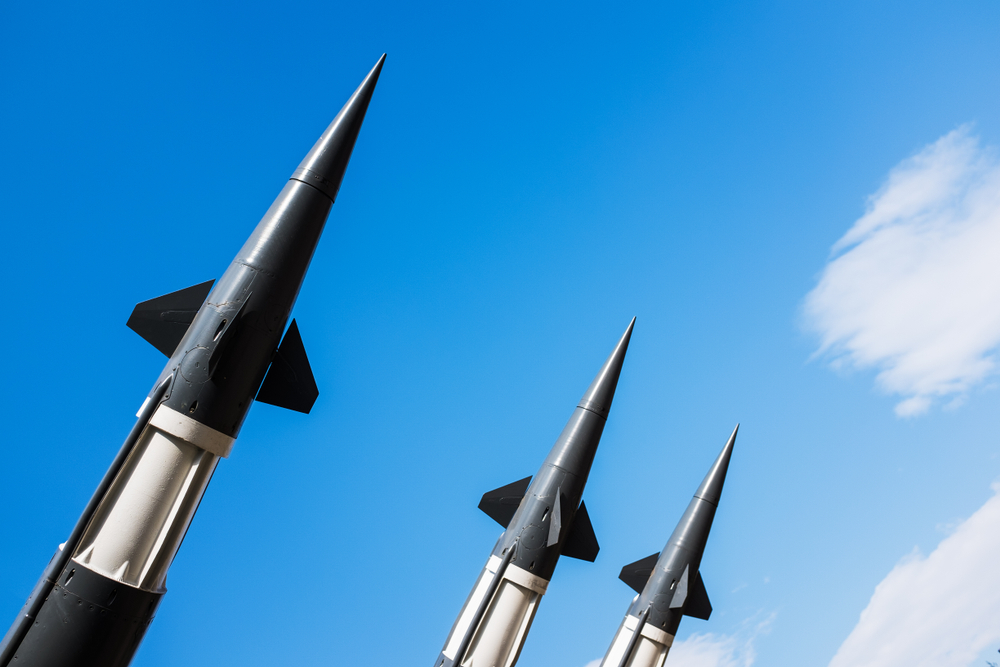
“Bloodthirsty AI models more willing to start nuclear war than human counterparts.”
It seems almost inevitable that any media headline about AI will be hyperbolic. Yet this statement, taken from a February 2026 New York Post headline, was accurate. The alarming claim stems from a widely publicized study by King’s College London, which found that, in simulations of international crises, LLMs reached for the nuclear trigger 95% of the time.
This academic study drew mainstream-media attention because it touched upon a cultural narrative that has long combined the concept of AI with nuclear weapons. Arguably, the first movie to bring the two together was 1957’s “Invisible Boy,” featuring Robby the Robot, who would later become famous (and less bloodthirsty) in the 1960s TV series “Lost in Space.” The trope has since been repeated across franchises ranging from “The Terminator” to “Mission Impossible.”
Yet the AI-nuclear fear is not confined to the media and movie theaters. The King’s College study is only one of scores of similar academic and think-tank research projects on AI’s proclivities for nuclear war, which have been backed by millions of dollars in research grants. Among the entities that have funded such work are the National Nuclear Security Administration (NNSA), the Department of Energy, the Department of Defense, Anthropic, the MacArthur Foundation, the Carnegie Corporation of New York, the Future of Life Institute, Open Philanthropy, RAND, and the Smith Richardson Foundation. It is also an essential element in the larger field of study on the existential risks of AI, funded to the tune of multiple billions of dollars at many of the world’s leading universities, including Oxford, Cambridge, Stanford, and the University of California, Berkeley.
Beyond academia, the discussion of AI-nuclear risks has also entered the halls of government in settings that range from the UN to multiple US-China superpower summits to the US Congress. It has even become part of the reasoning for why states like California are seeking limits on frontier AI. Indeed, the fear of “the incorporation of AI into nuclear decision-making” has reached such a height that the “Bulletin of the Atomic Scientists” earlier this year moved its famous “Doomsday Clock” to 85 seconds to midnight, the closest it has ever been. (For comparison, the clock was at 12 minutes in the aftermath of the Cuban Missile Crisis.)
Despite all this, I am excited to be the bearer of good news: AI is not going to start a nuclear war anytime soon. I do, however, also have bad news: AI is making it more likely that humans will start a nuclear war. And, if we want to avoid that outcome, we should focus on mitigating real risks, resisting incentives that steer us toward the tropes.
The following report will explain why no government will likely delegate nuclear launch to machines either now or in the future, and identify three mechanisms—arms racing, miscalculation, and machine speed—by which AI could already be amplifying the risk of humans deciding to go to war.
Studies such as the one from King’s College consider hypothetical scenarios in which an LLM determines whether a nation should proliferate nuclear weapons or even when to fire a full nuclear strike. Yet there are multiple good reasons why humans will not, in reality, hand machines this responsibility.
Adversarial robustness and a dearth of training data present technological barriers. First, to be trusted with nuclear decisions, AI systems would need to not only be more capable than humans but also extremely adversarially robust—meaning that geopolitical opponents could not influence such systems by manipulating input data. While capabilities have come a long way, adversarial robustness has historically proven very challenging. Another glaring issue is the availability of training data for fighting nuclear wars: there is none.
There are laws and agreements prohibiting fully autonomous nuclear decisions. Alongside the technological barriers are domestic laws and international agreements. Section 1638 of the US FY 2025 National Defense Authorization Act calls for keeping a human in the loop for nuclear decisions. Similarly, Chinese President Xi Jinping and then–US President Joe Biden agreed in late 2024 that AI should never be granted the authority to initiate a nuclear launch.
AI technology may advance and laws could certainly change or be ignored. But one thing will not: the use of nuclear weapons will always come down to decisions of politics and war. This is critical. It explains why AI systems are not presently in the position they occupy in the studies and movies and why they will not occupy that position in the future.
Take the area of politics. In the 2025 film “A House of Dynamite,” a fictional US president facing a nuclear crisis laments that he and his team spent more time on a Supreme Court justice nomination than on whether to launch a nuclear strike—the most important decision of not just his life but maybe human history.
What the various scenarios and studies require is that a human leader either consults an AI for advice, when weighing a potential nuclear strike, or has already turned over this decision to a machine at some point beforehand. Either would be the most unlikely of political outcomes, in any form of government outside the imaginings of Silicon Valley techno-state.
Political leaders would not give up the most important decision of their lives to an AI. Political leaders would neither surrender nuclear decision-making to a machine nor blindly follow its advice contrary to their own judgment. To think that elected leaders would defer to an AI even on whom to nominate to the Supreme Court, let alone on a nuclear launch, is to assume that such leaders lack confidence in themselves and their judgements—something which political leaders are not in short supply of. This is why it was so easy for Biden and Xi to agree not to let AI decide nuclear launch; it is something they would never have considered anyway.
Any suggestion to put AIs in charge of nuclear decisions would spark public outcry. Moreover, even to contemplate creating the policy and technical mechanism for changing the multiple-billion-dollar, three-generations-old nuclear command-and-control architecture would create career-ending outcomes for democratically elected leaders. Only 3% of Americans believe that we should trust information from AI even “almost all of the time.” A leader proposing to trust it with nuclear war could expect to be rapidly relieved of any power to implement that proposal.
/inline-pitch-cta
Authoritarian leaders are even less inclined to hand over consequential decisions to anyone or anything other than themselves. This is even codified in some nations’ command structures. Under China’s “Chairman Responsibility System,” the operational authority to command or launch nuclear weapons rests solely with the chairman of the Central Military Commission, who just happens to be the general secretary of the Chinese Communist Party.
Militaries are rapidly adopting AI, but not for nuclear decision-making. Of course, militaries are spending billions of dollars on AI, but not on integrating it into nuclear decisions. As a study on the “nexus of nuclear weapons and AI” summed, “AI is unlikely to have material impact on nuclear command and control, which for several decades have synthesized automation but not autonomy.”
Rather, like institutions across the economy and society, militaries are turning to AI to save on money, time, or head count, and/or to get better at the tasks they are not good at. Nuclear warfighting is not an area where militaries feel those pressures.
To begin, the vast majority of militaries’ AI applications are off the battlefield in support roles, usually with civilian parallels, ranging from military medicine to military logistics. Such support roles make up over 90% of military jobs.
Militaries need AI to assist in dynamic, non-nuclear warfare. Applied to warfighting, the US military has been focused on closing the “OODA loop” (Observe, Orient, Decide, Act) in non-nuclear war, through enhancing sensors, expanding analytical capabilities, and accelerating the application of this process to a target to strike or defend against.
Consider the 2026 Iran-US war. The war began in an era with AI, and may have been partly about nuclear weapons. However, neither the decision to go to war nor the use of AI in the war have been linked to any of the worries that have consumed so many grant proposals and reports. AI was used by all parties, but in nothing like the way it is used in the scenarios. US and Israeli forces tracked hundreds of thousands of moving parts, analyzing both their own forces and their potential targets, and then parsed them out for thousands of strikes. In the first four weeks of conflict, US forces struck more than 10,000 targets, while Israel hit thousands more.
In turn, Iran used AI to aid in its tracking and targeting of everything from tankers to US helicopters, firing off thousands of drones and missiles. The conflict then moved into a cat-and-mouse game in which Iranians sought to fire hidden missiles or drones before loitering US drones found and destroyed them. Each side would then try to analyze whether it had destroyed its target or needed to repeat the attempt. One military analysis described the machine-speed cycle as a “90-second war” taking place over multiple months.
Nuclear weapons, by contrast, are both physically designed and organized in military doctrine to be used against large and usually pre-decided targets. They are not used in repeated short-loop cycles over campaigns of weeks or months. To put it another way, the military needs AI to help it find a needle in a moving haystack, pull that one needle out, attempt to snap it, and then determine whether it was snapped. The military does not need AI to find the haystack sitting in a field, set it on fire, and then know whether or not it burned down.
These non-nuclear visions of AI are shared by other nuclear powers, including China. Over the last decade, the People’s Liberation Army has pursued an “intelligentization” program that integrates AI as a decision aid for rapid attacks on the enemy’s “kill chain”; AI-coordinated swarming drones to overwhelm defenses; and cognitive warfare that uses AI to target human minds through information and cyberattacks. The PLA Information Support Force is building a “network information system” that uses AI, cloud computing, and big-data techniques to fuse data from operational units and create “dynamic kill networks” across air, land, sea, space, and cyberspace domains. AI is not, however, in charge of nuclear weapons. Indeed, in a study of over 9,000 AI-related requests for proposals published by the PLA, establishing its AI “wish list,” projects using AI for nuclear decisions did not feature once.
On the contrary, running through China’s military approach to AI is a goal to steer military operations from Beijing. Far from delegating all war choices to machines, Chinese leaders very much want machines that follow the orders of humans—specifically, that same decision-maker in charge of nuclear weapons, the general secretary of the Chinese Communist Party’s Central Committee.
If we truly want to support global peace and security, we should not focus on the cinematic threat narratives in which AI controls nuclear decision-making. Instead, the more realistic concerns arise not from the mix of AI and nuclear weapons but from interactions between AI and humans. The first of these concerns is that the promises of AI are now fueling an arms race more intense than previous arms races.
The current AI arms race is heightening feelings of insecurity. A 2026 report by the US Center for Strategic and International Studies summed up the consensus among policymakers and researchers this way: “Conventional wisdom holds that an AI arms race will define the twenty-first century and could be decided as early as 2030.” This viewpoint has even been codified into the highest levels of state doctrine. The second Trump administration’s National Security Strategy explicitly proclaims that AI “will decide the future,” echoing Russian President Vladimir Putin’s 2017 statement that whoever leads in this field “will be the ruler of the world.” In China, too, achieving global leadership in AI is a non-negotiable national priority; the country’s most recent five-year plan pledges to use “extraordinary measures” to realize that goal.
What is playing out is a classic security paradox: as nations accelerate their capital investment to secure a technological edge, they raise the stakes and concerns for their opponents, ultimately feeling more vulnerable than when the race began. In short, the more you arms-race, the less secure you feel. But, while arms races are nothing new, AI differs from previous military technologies in ways that introduce three additional layers of insecurity.
AI is considered a winner-takes-all technology, intensifying the arms race. First, AI may confer a decisive advantage at a smaller capabilities lead than other technologies. Historically, a nation could trail an adversary technologically and even quantitatively but still stay in the race. For instance, at the turn of the 20th century, the race for dreadnought battleships exacerbated tensions between Imperial Germany and Britain and became a contributing factor to World War I. Notably, though, the German navy never built as many dreadnoughts as the British. (Between 1908 and 1912, Britain launched 29 capital ships, while Germany launched 17: just under 59% of its opponent’s number.) Yet this disparity didn’t keep Germany from fighting the Royal Navy to a draw at the 1916 Battle of Jutland and maintaining the threat of a “fleet in being” for the rest of the war. So too in the nuclear age, China has maintained deterrence against the US with only 16% of the warhead count—approximately 600 warheads against the US arsenal of 3,700.
With AI, however, policymakers appear to perceive domination in binary terms: falling behind is equated with a total loss of strategic agency. Leaders would not tolerate having only 16% or even 59% of their opponent’s technological capability. On the flip side, a leader who believed their military AI capabilities were 85% better than those of their foe might feel invincible.
AI introduces a fear of falling behind permanently. Second, exacerbating insecurity even further, that perceived binary domination may prove real. At some point, an AI that darts ahead could conceivably become infinitely better than its competition, forever, potentially affording the leading nation a permanent decisive advantage. Regardless of whether this turns out to be true, it creates a fear of falling behind in a race where catching up feels impossible. Every technical milestone then becomes interpreted as a potential catastrophe. When the DeepSeek R1 model advanced beyond US expectations for Chinese LLMs, for instance, the discourse immediately framed it as a “Sputnik moment” for the United States.
/odw-inline-subscribe-cta
Uncertainty about how best to use AI contributes to heightened concerns. Finally, AI’s versatility adds a layer of uncertainty about the smartest ways to use it. In past arms races, whether with ballistic missiles or battleships, the technology was largely uniform. The goal was simply to gain and deploy as many units as possible. AI, however, can diverge into radically different architectures and many more strategies. For instance, an article in “National Interest” warned that “America is running the wrong AI race,” by focusing on advancing frontier models, rather than on large-scale deployment of existing ones.
The overall result is that the AI age is creating a sense of extreme insecurity among many nations—an environment that is not conducive to peace.
A second concern about AI is its potential to add to the fog of war. Although AI is frequently marketed as a tool to provide clarity in complex analyses, it can also fuel misperception and miscalculation in multiple ways, potentially increasing the risk of humans deciding to go to war.
Militaries are using AI in sophisticated deception operations. First, as militaries integrate AI into their (conventional, not nuclear) battle plans, they are realizing they must also learn how to defeat opponents through new means of trickery. Recent PLA wargames have focused on how to “break intelligence,” preparing for battles in which AIs “work to distort each others’ reality.”
AI is being used for political deception. Second, AI is being used to dramatically scale up political disinformation campaigns. Conflicts in Ukraine, Gaza, and Iran have expanded to include what can be thought of as “LikeWar” battles to drive false information viral. Such campaigns involve automating information operations and creating high-fidelity deepfakes—tools that have already been used to successfully mislead heads of state, including those leading nuclear powers. US and Pakistani leaders have reacted to and pushed AI-generated imagery online. Studies on the present and future of deception operations suggest that this phenomenon will grow in scale and impact.
AI systems are vulnerable to errors, particularly in military contexts. The most dangerous and powerful kind of deception, however, is self-deception, which we can think of in both machine and human terms. AI undoubtedly brings incredible insights in various domains, often drawing on beyond-human analytical capabilities. Still, no matter how far the technology advances, these systems are plagued by issues that range from hallucination to algorithmic bias. Such problems, caused in part by training data that can never fully represent the real world, are especially salient in war. The civilian LLMs being brought into military systems are largely trained on the open internet—an objectively poor environment for high-stakes accuracy. Using military training data cannot solve the issue, since no two wars are the same. Datasets pulled from counterinsurgency operations in Iraq and Afghanistan, for instance, provide poor parallels for the conflicts of today and tomorrow.
A lack of understanding about AI could lead humans to make poor decisions. Yet, when it comes to miscalculation, the greater risk may lie with overly confident humans. History shows that the most dangerous phases of arms races are the earliest stages, when neither military nor political leaders yet fully understand the new weapons, and they make poor decisions based on erroneous assumptions. Before World War I, for example, the belief that new technologies like the railroad and fast-firing artillery gave a decisive advantage to the offense helped drive the quick march to war after the assassination of Archduke Ferdinand in Sarajevo. It turned out that these technologies in fact advantaged the defense, leading to four years of horrific stalemate in the trenches. A similar belief permeates discourse today—that AI rewards the side that strikes first (the offense) in every conventional war domain, from air strikes to cyberattacks.
It is more difficult to estimate opponents’ capabilities in AI than in other technologies. This risk is compounded by the challenges of understanding both one’s own capabilities and the enemy’s. Estimating power in the AI era is even more difficult than with traditional, kinetic weapons. Ships, tanks, planes, and even nuclear weapons can be counted, their physics understood, and their capabilities summed and compared. However, beyond estimating rivals’ data center capacity, understanding AI capabilities is far more difficult. Whether models can be accurately benchmarked is heavily contested. Even if accurate benchmarking were possible, how that would translate to battlefield performance would remain unknowable by humans or machines.
What we do know is that arms races traditionally incentivize exaggeration and fearmongering. Examples from the Cold War are the 1950s “bomber gap,” followed by the “missile gap”—Americans’ beliefs that the Soviet Union had achieved significant advantages in each technology. Both “gaps” turned out to be mythical, but they nonetheless contributed to the Cuban Missile Crisis. Similarly, both the George W. Bush administration and Iraq’s then-president, Saddam Hussein, issued claims about weapons of mass destruction that turned out to be nonexistent.
The outcome of direct interactions between opposing military AIs is unpredictable. Finally, the effects of interactions between AIs themselves create an informational void within military doctrine. In the past, adversaries generally understood one another’s concepts of fighting; with that awareness, they could deploy wargames and analyze recent conflicts to project outcomes. Because no nation will tip its hand regarding its true AI capabilities, and because military use of AI is relatively novel, the first time AI systems collide directly will likely be in a live, high-stakes environment where miscalculation is almost certain.
The third and final way in which AI is increasing the risk of war is through machine-speed operations. Yet, this is not about an AI making instantaneous decisions on nuclear strikes. Rather, it is about how AI is enabling a new generation of weapons that complicate humans’ nuclear decision-making.
AI is enabling weapons that compress the time window for humans to respond. The most notable examples of this phenomenon are boost-glide hypersonic weapons, including Russia’s Avangard, China’s DF 27, and America’s Dark Eagle. Despite their name, these delivery systems do not fly substantially faster than intercontinental ballistic missiles. What distinguishes them is that they use AI-enabled technologies, including adaptive control adjustments and cognitive and quantum inertial navigation systems, to make microsecond decisions and adjustments, while moving at thousands of miles per hour through denied airspace. By maneuvering around sensors and defenses, boost-glide weapons get much closer to their target before they are detected, allowing less time for humans to decide how to respond.
This “decision-time compression” represents the core of such weapons’ risk. Traditionally, Nuclear Command, Control, and Communications architectures provided a “decision window” of roughly 15–30 minutes to verify an incoming strike and weigh a response. To put this into context, the seemingly rushed time frame of “A House of Dynamite” spanned 18 minutes of deliberation, depicted by a 112-minute movie. A hypersonic weapon reduces the number of minutes for decision-making to single digits.
Shorter time windows often worsen human decision-making. The psychological reality is that humans make decisions poorly under stress and in short time frames, so anything that shrinks this window raises the likelihood of bad outcomes, such as a “Flash War.” There is a documented tendency for leaders to “lock in” on the first early concepts that enter the room—ideas that, in a more traditional crisis, might be aired out and debunked through hours of give and take. Historical experience confirms this; many of the most dangerous options considered by the US during the Cuban Missile Crisis were proposed during those frantic early days and then fortunately cast aside. AI-enabled weapons would not allow time for the same level of scrutiny.
The notion that AI could start a nuclear war may be attention-grabbing. Yet research, grantmaking, and policy should be anchored in what is realistic rather than allowing the most dramatic narratives to steer the discourse disproportionately. The goal should be to understand and implement safeguards that tackle actual and likely risks, such as those posed by arms racing, misperceptions, and decision-making as described above.
Instead of pursuing purely symbolic measures to keep AI from nuclear weapons, we should prioritize reducing the incentives for and externalities of arms races, for example by finding ways to improve the defensive side of the equation. There may also be ways to reduce the likelihood of misperception, including through a concerted effort to enhance the education of political and military leaders about AI’s realities.
Finally, if we are to pursue effective arms control, our primary focus should not be on the speculative fear of AI launching a nuclear strike but, instead, on the real and growing number of physical platforms that shrink human decision-makers’ window for deliberation. For instance, prioritizing the regulation of hypersonic delivery systems—an existing technology that heightens the risk of nuclear catastrophe—is a more viable path toward strategic stability than chasing science fiction.
See things differently? AI Frontiers welcomes expert insights, thoughtful critiques, and fresh perspectives. Send us your pitch.

AI will create a trillion-dollar resilience industry. The Federal Government can seed its champions today.
AI is poised to accelerate the industrialization of space. The nation that leads in AI might secure control of the space frontier before rivals realize it’s too late to catch up.