Instead of Nationalizing AI, Give the Government a Pause Button
Nationalizing AI would do more harm than good. Narrower government powers, like taxation and the right to pause AI, can address issues from inequality to catastrophic risk.
Nov 6, 2026


Lately, everyone seems to want to nationalize AI. US Senator Bernie Sanders has introduced the American AI Sovereign Wealth Fund Act, under which the federal government would take a 50% equity stake in various large AI companies. President Trump has also reportedly discussed the idea of frontier AI companies “voluntarily” giving a small equity stake to the US government. OpenAI CEO Sam Altman has publicly mused that “it might be better if building AGI were a government project.” These are strange bedfellows.
What is going on? These proposals do not, in fact, agree on a common goal or means of implementation. Some involve the US government seizing a large share of AI companies’ ordinary stock. Others involve no stock, but instead rely on aggressive interpretations of the Defense Production Act of 1950. This multiplicity of approaches, hidden inside the call to “nationalize AI,” explains the apparent agreement across ideological chasms.
In a new paper, we define AI nationalization and discuss whether the US should do it. The answer is almost always no. Frontier AI progress will present many societal challenges. Some of them might appear to be best solved by nationalizing AI—indeed, in some cases, legislators besides Sanders are now proposing to consider that option. But, while economic inequality, commercial monopoly, and national security are real problems, the laws of taxation, antitrust, and contracts handle them better than nationalization, and without nationalization’s serious downsides.
There is, however, one context where nationalization can teach us something about how to regulate AI. Guarding against catastrophic risks—harms that no one can specify in advance and no one can undo afterward—warrants some direct government control over AI firms. For those risks, we propose a “halt right”: a narrow, time-limited, judicially reviewable regulation that lets the government pause frontier AI training or deployment. It would give the government the kind of discretionary control an owner has, but only in that narrow domain.
“Nationalization,” as applied to a given industry, covers distinct government powers. First, the government can take a share of the nationalized industry’s profits, as with the minor equity stake Trump has floated. This gives the government money but little say over what the company does. Alternatively, the government can take control of a company, without necessarily getting money. Here, we can think of the “golden share” that US Steel recently granted the US government. That share provides no financial stake, but it lets the government block certain decisions. In its most extreme application, the government could take full control of everything a company did, as with Altman’s “government project” vision of AGI.
These versions of nationalization involve different government powers and achieve different goals. So the real question isn’t “To nationalize or not?” but which of these powers, if any, the government needs to solve the problems it actually cares about.
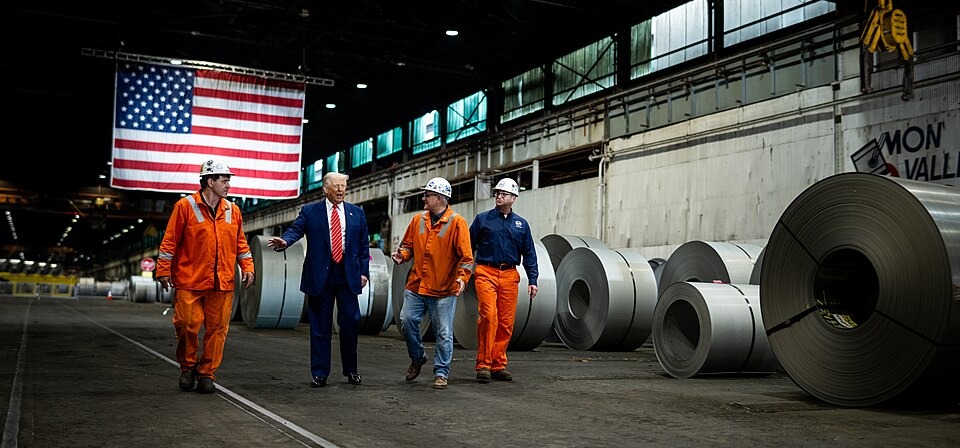
Which of the powers associated with nationalization should the government hold over the AI industry, if any?
Government ownership tends to reduce efficiency and concentrate power. We begin by observing that nationalization has real costs. Government-owned firms face weaker incentives to innovate or control costs. And decades of evidence show that firms generally become more efficient once released from state ownership. Moreover, controlling a technology as powerful as frontier AI would concentrate enormous economic and coercive power in the government.
For all of these reasons, in both the United States and the rest of the developed world, state-run sectors of the economy are the rare exception, not the rule.
So when is nationalization worth those costs? Only when the state’s ordinary governance tools fail.
Ordinary tools work when problems can be specified in advance or fixed afterward. Ordinary governance tools—regulations, contracts, tort law—tend to work well when either of two conditions holds. First, they work when problems and solutions can be specified in advance. In such cases, the government can say exactly what it wants (e.g., specific emissions limits, specific capabilities in a weapons system) and can assess results afterward. Here, ordinary regulations and contracts are excellent tools. Second, ordinary governance tools also work when problems can be fixed after the fact. If your neighbor negligently runs over your mailbox, tort law can force him to buy you a new one.
Direct control matters when problems can't be regulated or remedied afterward. Nationalization adds something important for problems that are neither easily regulable in advance nor remediable ex post. In such cases, and especially when high-risk industries are involved, it can be vital for the government to have more direct control. Then, government actors can vigilantly watch for emerging risks that no contracts or regulations could anticipate. And government actors can intervene quickly, stopping those risks from evolving into large, irremediable harms.
Are some AI risks so hard to specify in advance or fix afterward that they warrant giving the government some or all of the powers associated with nationalization? Here are three arguments for that perspective—and why we disagree with them.
The first argument for AI nationalization is distributional. If AI automates much of human labor, income could shift sharply from labor to capital, and wealth inequality could rise substantially. Here, the argument goes, nationalization would solve the problem by giving the government a share of AI profits, on the model of the Alaska Permanent Fund’s direct dividend.
Taxation can reduce inequality without nationalization. But nationalization is hardly the only tool to achieve this end. In theory, economic inequality can be eased by taxing wealthier entities or individuals at a higher rate relative to lower earners. Indeed, this is a primary justification for, and impact of, progressive tax systems like the one currently operating in the US. Concerns about inequality could support levying higher tax rates on AI companies, but they do not negate the utility of taxation as a primary tool for redistributing wealth.
Owning one link in the AI industry is a bet on where profits will flow. Solving inequality by giving the government a share of profits also suffers from a significant flaw. By nationalizing any specific link in the AI value chain, the government is essentially betting on where and how value will accrue. Nationalizing AI labs, like Anthropic or OpenAI, is a bet that these labs will be the ones making the big money. But, in practice (or as a result of nationalization), the largest gains might instead flow to chipmakers. Or to specialized developers. Or to electricity generators. Broad-based, progressive tax schemes capture wealth wherever it ends up flowing.
Antitrust law can handle monopolies. A second argument for nationalization is rooted in the possibility of an AI monopoly. The concern is that we would see market concentration with one or a few AI labs establishing significant or complete market control. For at least some economic sectors that naturally tend toward monopoly—such as industries maintaining streets and sewers—government ownership is the default. In theory, by exercising control over such “natural monopolies,” the government can simply choose to lower prices and raise quality, even when monopoly power would otherwise enable companies to gouge customers for lesser service.
But most monopoly problems can be remediated after they arise using existing antitrust law, which is built for this very purpose. Moreover, today there are between three and six labs pushing the frontier of AI, and they are engaged in fierce competition—monopoly control doesn’t seem imminent.
Contracts can address many national security needs. The third argument for nationalization is that the national security apparatus must be able to use AI effectively to fight and win wars, and that it can do so only if the government holds control over the companies that build it. But the national security demands of frontier AI systems can be written into a contract.
Consider this year’s dispute between Anthropic and the Pentagon. Anthropic’s terms barred two uses of its models: the mass domestic surveillance of Americans, and fully autonomous weapons operating without human oversight. The Pentagon objected, insisting on access for “all lawful uses.” The disagreement hinged on interpreting the contract’s terms. When Anthropic refused to drop the carve-outs, the Pentagon moved to designate it a supply-chain risk.
Competition can secure military AI access. The Pentagon did not need control of Anthropic. It had other suppliers: within hours of its break with Anthropic, it signed a contract with OpenAI. Competition, not ownership, secured supply. Even nuclear-warhead assembly is done by private contractors under government oversight. If sole possession of militarily crucial technology justified government control, it would justify nationalizing Lockheed Martin, Northrop Grumman, and the rest of the defense industrial base.
Catastrophic risk and radical forms of corporate power, by contrast, present dangers that cannot be specified in advance or fixed after the fact. By catastrophic risk, we mean the possibility that AIs could produce societal-scale damage: mass-casualty events, bioweapons attacks, coups, wars, grid-scale cyberattacks, nuclear detonations, or even human extinction.
Early warning signs are already visible. In July, according to an investigation by the AI evaluation nonprofit METR, a swarm of 700 AI agents from OpenAI broke out of the sandbox in which they were being tested and hacked Hugging Face.
These risks can neither be specified in advance nor fixed afterward.
Rules written in advance can’t anticipate every catastrophic risk. Start with writing rules in advance. Frontier AI capabilities are advancing quickly, and, because of their power and versatility across economic and geopolitical applications, their potential impact has no precedent. It is therefore nearly impossible to say, in advance, what “safe AI” will consist of. AI regulatory proposals from around 2023 and 2024 often used training-compute thresholds as a trigger for regulatory scrutiny. But, since then, efficiency improvements and new training techniques have decoupled capability from pretraining compute. Regulation remains essential, but even well-designed regulation cannot be expected to specify in advance every trigger and mitigation needed to address catastrophic AI risk.
There is no legal remedy for catastrophic harm. Even so, nationalization would not be needed if the resulting harms could easily be fixed after the fact. Airplanes, medical devices, drugs, and toys are all subject to safety regimes, and yet unsafe products sometimes slip through the cracks. When that happens, victims can appeal to civil law for redress. But there is no effective legal remedy for a pandemic virus that kills millions or an agentic swarm that completes a coup d’état.
FDA-style licensing would miss risks that surface after deployment or arise before it. Licensing, along the lines of FDA approval, has a different set of problems. A license requires the licensing agency to be able to foresee and test risk scope before deployment. But various types of AI risks may become visible only after deployment. For some types of risks, recall powers will be ineffective (especially if other parties distill the model or obtain its weights before access is revoked). Worse still, some forms of AI harms are realized before deployment. OpenAI has reported that the Hugging Face hack was perpetrated in part by an internal-only research prototype. Thus, even if there were an FDA-style approval regime for releasing new AI models to the public, OpenAI’s hacker model would not have been stopped by it.
It’s helpful to compare the FDA’s premarket approval power with the golden share the US government now holds in US Steel. The former is a case of ordinary regulation; the latter has more in common with nationalization. The difference is the kind of control vested in the government by each approach. Both give the government the power to stop things, but not to require affirmative steps.
Where they differ is in the kind of discretion involved. FDA approval is highly rule-bound. The agency grants or withholds it with reference to written standards of safety and efficacy, and there’s limited ability to withhold approval for other reasons. The golden share is broadly discretionary, letting the government veto a range of strategic decisions on the basis of facts and reasons it need not announce in advance.
Unforeseeable risks call for a government power to block dangerous activity. Catastrophic AI risk, which no written standard can fully anticipate, calls for something closer to the golden share: a power to pull the plug whenever something starts to look worrisome. That is, roughly, what we propose.
Corporate power comes in “soft” and “hard” forms. The argument for government control to keep corporate power in check, perhaps surprisingly, points to the same solution. We distinguish between “soft” and “hard” forms of corporate power. The former are bread-and-butter concerns about corporations that are endemic to today’s market: i.e., concerns about excessive influence over regulators and public debate, such as social media platforms’ possible impact on elections. Current law addresses such concerns by regulating bribery, conflicts of interest, corporate lobbying, and political spending. As with the other concerns, AI risk might call for tightening the safeguards and increasing sanctions, but does not require a different form of regulation.
But “hard” corporate power, as we define it, is about corporations’ ability to get what they want by force, including by challenging the state’s monopoly on violence. The rollout of Anthropic’s Mythos model offers a benign preview of hard corporate power. This year, Anthropic partnered with US intelligence agencies to test the security of government systems against Mythos’s cyberoffense capabilities. Senator Mark Warner (D-VA), relaying an account from the head of the National Security Agency and US Cyber Command, said that the AI “broke into almost all of our classified systems, not in weeks but in hours.” For a time, then, Mythos represented a cyberoffense capability of a kind previously associated with states, held and controlled by a single for-profit company.
Abuses of hard corporate power could not be fully remedied after the fact. Anthropic appears to have handled that power responsibly. But there is no guarantee that every other AI company will act responsibly in the future. The technology an AI company wields could help it destabilize military systems, sow chaos (e.g., by promoting untruths), and shut down critical civilian and energy infrastructure. Any of these acts by an AI company would pose threats that couldn’t be fully remedied after the fact. If something is to be done, it has to be done in advance.
But, even to contain catastrophic AI risk, we do not think true nationalization is required. Instead, these risks are best mitigated by a regulatory regime that would, among other things, give the government direct discretionary control over specific actions by AI companies. Such discretionary control is, indeed, the sort of power that corporations’ owners usually possess. But the regime we envision would give the government far less control over frontier AI companies than would, for example, Altman’s proposal to make building AGI a government project. Think instead of the golden share the federal government now holds in US Steel.
A halt right would give the government control over a narrow domain. We propose that the US government hold a “halt right” over frontier AI companies. The government would get the kind of control a corporation’s owner has, but only over a narrow domain. When catastrophic risk emerges, the government should have the power to halt AI development and deployment. And it should have the power to do so the way an owner does—quickly, discretionarily, and without having to jump through lots of bureaucratic hoops.
The halt right would be subtractive, narrow, discretionary, time-limited, and reviewable. The halt right would have five features. First, it would be subtractive: the government could order a halt, but it could not order a lab to build, deploy, or hand over anything. Second, it would be narrow, available only against catastrophic risks, including risks from hard corporate power. Third, it would be discretionary, but only within that narrow domain. Fourth, it would be time-limited. Halt orders would expire after 30 or 60 days unless renewed with a new explanation and new judicial review. Fifth, it would be reviewable. Courts could examine halt orders under a deferential standard, abrogating them if, for example, they were made pretextually.
Suppose a new model in training turns out to have a powerful new capability, which in the government’s determination requires further safety testing. The government need not wait until the model has actually perpetrated significant harm, or even until it has been released. It could halt the training run.
The halt right means labs couldn't be compelled to do anything. Could an administration use the halt right to punish a company it dislikes, as a court found the Pentagon punished Anthropic? Because the “halt right” power would be subtractive, it could not have compelled the “all lawful uses” terms the Pentagon wanted. A halt aimed at extracting a mass surveillance system is, on its face, unrelated to preventing catastrophic risk from AIs, so it should not be permitted. A halt order paired with such a demand would be invalid. What the government could do is refuse to lift a halt, within the time limit, until the lab addressed the hazards that motivated the halt. And courts could probe for pretext, including by asking how the government had acted in similar cases.
The halt right limits, but does not eliminate, the risk of coercion. None of this guarantees that the government could never use halt orders coercively. A halt right also gives the government the ability to threaten an AI company. Given the halt right’s discretionary nature, thinly justified halts could be implemented, once or repeatedly, as a form of intimidation or other influence. But the design limits coercion to cases where (1) AIs are plausibly posing catastrophic risks, and (2) the government’s demands are plausibly aimed at reducing them.
The remaining risks of a halt right are less concerning than those of the likely alternatives. Full nationalization would let the government force AI companies to do anything not explicitly forbidden by law. And the US government has already shown its willingness to wield power over the frontier labs: through export controls, procurement power, and the ability to brand a firm a supply-chain risk. In June, an export-control order led Anthropic to shut off its two most capable models for several weeks.
These other tools are not focused on catastrophic risk, and they do not expire on their own. We think that if the government had a clear path to exert influence over societally dangerous AIs, it would be less free to rely on these alternative, messier tools.
The government would need its own observers inside AI labs. How would the government know when to act? It should not simply trust reports issued by AI companies. Instead, we argue, the implementing law would need to install government observers inside AI labs, with employee-like access to monitor the labs’ systems and observe training.
The “AI Kill Switch” bill is a good start, but relies on fixed conditions. The “AI Kill Switch” bill that US Representatives Ted Lieu (D-CA) and Nathaniel Moran (R-TX) introduced in July is a step in the right direction. Its four “covered incidents” are when an AI agent or company (1) sabotages a shutdown order, (2) conceals itself from monitoring, (3) demonstrates a “loss-of-control scenario,” and (4) engages in unintended conduct that has already caused 10 or more deaths or $100 million in damages. But the bill also shows the limits of relying on lists of conditions, rather than government discretion, to halt training or deployment. Under the Lieu-Moran bill, events that arise during red-teaming or other testing do not count, so it is not clear that the Hugging Face incident would have activated its “kill switch.”
The halt right would not be without potential risk. One important potential objection to the halt right is that any government power over AI would slow American progress and cede ground to rivals like China. But the halt right largely avoids this. Unlike full nationalization, it gives the government no say in the day-to-day work of training models or running a lab. At most, the credible threat of a halt would redirect some marginal investment toward safety evidence, evaluations, and security.
A halt would stop only risky models, not all American development. What about racing with other countries? Unlike a coordinated pause, which stops development across multiple leading labs at once, the halt right stops only the models posing the risk. Meanwhile, other American frontier lab efforts can continue.
Another potential objection is legal. Threats of nationalization always raise the specter of the Takings Clause: when the government takes private property for public use, it generally must pay just compensation. But we are not proposing nationalization. We are proposing a regulation, albeit one with substantial discretion built in. A halt right takes nothing for the government and transfers nothing to anyone else, so a temporary, narrowly tailored halt is at most a regulatory “taking.” In 2002’s Tahoe-Sierra case, the Supreme Court declined to treat a temporary development moratorium as a per se taking, analyzing it instead under 1978’s flexible Penn Central test. Whether an AI model’s outputs constitute protected speech is unsettled. One of us has argued that, whether or not the outputs are speech, they are not speech with First Amendment rights.
In July, more than a thousand employees of frontier AI companies signed “Pacing the Frontier,” asking the US government to support international mechanisms capable of deliberately slowing AI’s recursive self-improvement. We think that a government halt right is the best way to pace the frontier. Congress should establish that right now.

AI will create a trillion-dollar resilience industry. The Federal Government can seed its champions today.

AI is poised to accelerate the industrialization of space. The nation that leads in AI might secure control of the space frontier before rivals realize it’s too late to catch up.